Grounded Theory. Liberatory Practice.
At LFPS, we believe that you cannot dismantle a system you refuse to name accurately. We ground our studio in high-level critical frameworks—including Critical Race Theory, BlackCrit, and Ecosocial Theory—to strip away academic neutrality and expose the material mechanics of structural violence.
We look at health disparities as the cost of living under structurally violent, anti-Black, carceral, and punitive systems. By bringing elite scientific rigor into deep, non-extractive alignment with grassroots movements, we ensure our data never becomes extractive and our creative communication never lacks scientific accuracy. We operate at the intersection of theory, data, and street-level survival to map a path toward self-determination across the Black diaspora.
The Dual Engines of LFPS
To ensure our work is both academically unassailable and immediately usable for community survival, LFPS operates through two distinct, specialized leadership wings:
-
Scientific Inquiry, Institutional Rigor, and Global Resource Acquisition.
This wing serves as our intellectual and strategic anchor. It oversees our direct health and epidemiological research, coordinates data collection across our transnational Afro-diasporic hubs, manages protocol compliance through external commercial Institutional Review Boards (IRBs), and designs the evidence base required for legislative power mapping and policy briefing.
-
Creative Impact, Educational Design, and Studio Sustainability.
This wing serves as our engine of community impact and operational health. It actively translates complex statistical datasets into visual zines, workbooks, and multi-sensory installations. It manages our digital archive, web infrastructure, and the Scholar Shop, while directing our Movement School curricula, specialized workshops, and our commitment to weekly in-person community engagement.
Our Team
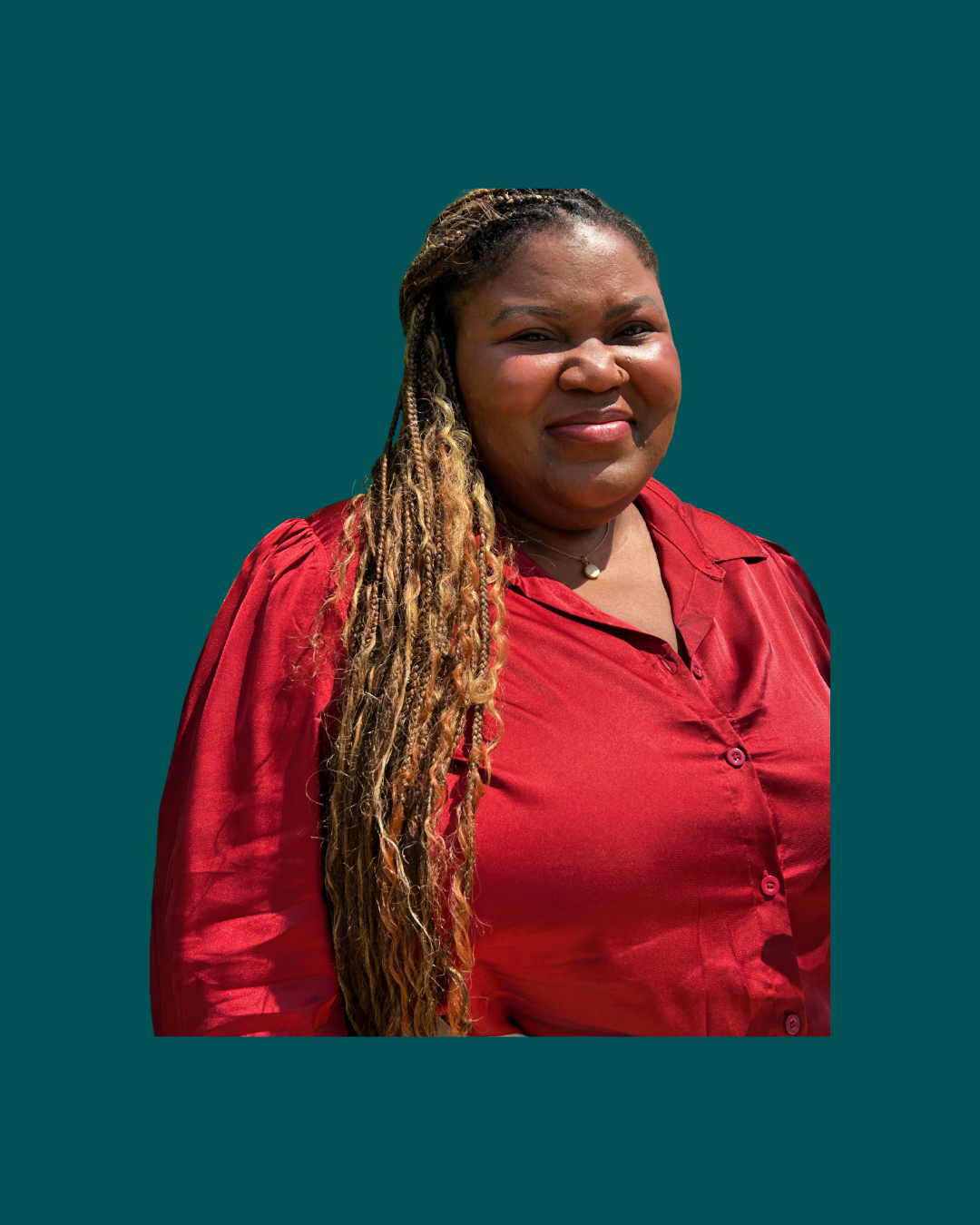

-
Co-Founder, Director of Praxis (COO)
Dr. Emma Blackson is a structural epidemiologist, social policy strategist, and the Director of Praxis at LFPS. She holds a PhD from Tulane University, a Master of Science in Social Policy from the University of Pennsylvania, and a Master of Public Health. Her research specifically investigates how carceral systems such as the school-to-prison pipeline and police lethality manifest as adverse health outcomes for Black folks.
At LFPS, Dr. Blackson bridges the gap between high-level epidemiology and community survival. She directs the studio's operational infrastructure, financial management, and digital archive, while leading the creative translation of data into visual zines, policy briefs, and movement curricula. Her work ensures that complex structural data is rapidly returned to the community as a tool for political mobilization and collective care.
-
Co-Founder, Director of Liberatory Research (CSO)
Dr. Briana Williams is a global health scholar, researcher, and the Director of Liberatory Research at LFPS. Holding a PhD from Tulane University and a Master of Public Health, her work centers on maternal and child health, reproductive justice, and transnational health equity across Latin America and the broader Afro-diasporic network.
As a specialist in Human-Centered Design (HCD) and participatory research methodologies, Dr. Williams ensures that LFPS's scientific inquiry is deeply collaborative, globally connected, and structurally rigorous. She leads the studio's international data collection, institutional partnerships, and regulatory IRB compliance, ensuring that data is used to protect communities rather than for academic extraction.
Our Operational Integrity
The Liberatory Futures Praxis Studio is legally structured as an independent, for-profit LLC. We intentionally chose this model over a traditional non-profit framework to protect our political autonomy, grant us the absolute freedom to engage in unrestricted policy advocacy and lobbying-adjacent work, and allow us to build a self-sustaining economic ecosystem through our creative products and specialized services.